Global · EN
Apparel Sourcing Company in Bangladesh: How Global Brands Can Source with Low MOQs, Ethical Compliance and Quality Control
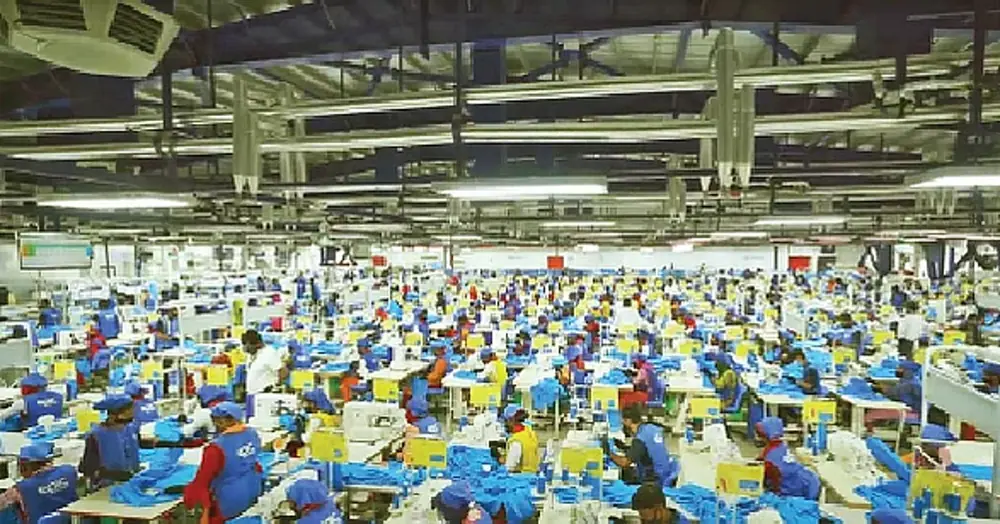
Bangladesh is one of the world's largest garment exporters, and for many brands it is the obvious place to look for cut-and-sew capacity. The difficulty is rarely finding a factory. It is finding the right factory for a small, specific order, then keeping fabric, trims, compliance paperwork and quality under control from 8,000 km away. That is the gap an apparel sourcing company in Bangladesh is meant to close.
This guide is written for brand owners, private-label founders, merchandise managers and workwear procurement teams. It explains what actually goes wrong in sourcing projects and how to prevent it.
Why brands source from Bangladesh, and where projects stall
Buyers come for scale, a deep supply base for knits and wovens, and competitive pricing. They get stuck on the same few problems:
- Minimum order quantities set for large retailers, not for a 300-piece first run.
- Unclear specifications that leave the factory guessing about fabric weight, fit and finish.
- Compliance claims that cannot be traced to a specific factory, scope and date.
- Inspection gaps that surface only when cartons arrive.
- Lead times that slip because trims or approvals were not planned.
None of these is a reason to avoid Bangladesh. All of them are reasons to run the project with a process.
What an apparel sourcing partner does
A sourcing partner sits between your brief and the factory floor. In practice the work looks like this:
| Stage | What happens | Risk it removes |
|---|---|---|
| Brief and tech pack review | Measurements, fabric, construction and artwork are checked for gaps | Costly guesswork at sampling |
| Factory matching | The order is placed with a factory suited to the product and quantity | MOQ mismatch, wrong equipment |
| Sampling | Fit, pre-production and wear-test samples are tracked against your spec | Surprises in bulk |
| Trim and fabric sourcing | Zips, labels, tape, thread and fabric lots are coordinated | Shade drift, late trims |
| Quality control | In-line checks and a final AQL inspection with a report | Defects discovered too late |
| Shipping and documents | Packing lists, carton marks and Incoterm-based freight | Customs and receiving delays |
Dressource - Apparel Sourcing in Bangladesh works in this model from Dhaka: one accountable team, a network of vetted factories, and a transparent supply chain you can ask questions about.
Low MOQs without losing control
Minimums exist because of fabric, not just sewing. A mill may require a minimum per colour, a dye lot has a practical floor, and a factory has set-up time for each style. That is why a "low MOQ" claim should always be followed by the question: low for what?
For low MOQ garment production, Dressource programs start from 50 pieces per style, and styles can be mixed within an order. The final MOQ is confirmed per project because it depends on the garment, the fabric and the decoration. Ask any supplier the same three things: what drives the minimum, what happens if you reorder, and whether a colour or trim change resets it.
A low MOQ is useful when it lets you test the market, not when it hides a higher unit cost you did not plan for. Ask for pricing at two or three quantity levels so you can see the curve.
Tech packs and fabric GSM: where most delays start
A tech pack is the document that lets a factory reproduce your garment. At a minimum it should contain technical drawings, a measurement chart with tolerances, a bill of materials, construction notes, colour references, artwork placement and packaging instructions.
Fabric weight is where specifications most often go wrong. GSM (grams per square metre) describes weight, but two fabrics with the same GSM can feel very different because of fibre, yarn and knit or weave. As a rough orientation, a lightweight jersey tee may sit around 150 to 180 GSM, while a heavy fleece hoodie can run well above 300 GSM. Treat those as illustrations, not rules: send a physical reference swatch and ask the factory to quote a tested GSM with a tolerance.
Trim sourcing: the quiet driver of cost and lead time
Zips, buttons, labels, drawcords, reflective tape and packaging are easy to overlook and slow to fix. A custom woven label or a specific zip can add weeks if it is ordered late. Decide trims during sampling, approve them physically, and keep an approved trim card with the sample so bulk production matches.
Ethical compliance and certified factories: what to verify
"Ethical" and "certified" are only useful if you can check them. Before you place an order, ask for:
- Which factory will make your goods, and where it is located.
- Which certificates cover that factory, including the scope, issuing body, issue date and expiry date.
- The difference between facility and product evidence. A social-compliance audit says something about working conditions at a site. A product certificate or test report says something about a specific fabric or garment. Neither replaces the other.
- Building and fire safety status for the specific facility, since programmes in Bangladesh are facility-specific.
Programmes you may encounter include audits aligned to amfori, Better Work assessments, and building-safety oversight through the RMG Sustainability Council. Dressource works with an ethical, sustainable factory network and shares certificate scope on request, so you can match each document to the factory that makes your order.
Quality control in plain language: AQL inspections
AQL (acceptable quality limit) is a sampling method. At final inspection, a random sample of cartons is opened and garments are checked against defect classes. Common practice is to allow few or no critical defects, and small limits for major and minor defects, often expressed as 2.5 for major and 4.0 for minor on a general inspection level. The exact limits should be agreed in writing before production.
A sound quality plan has more than one checkpoint: fabric inspection on arrival, in-line checks during sewing, and a final AQL inspection with a report you can read. Dressource runs end-to-end QC on this basis, and buyers can appoint a third-party inspector if their contract requires one.
Lead times and risk mitigation
Lead time is the sum of several stages: development, sampling and approval, fabric and trim sourcing, bulk production, inspection, and freight. The stage most buyers underestimate is approval: every day a sample waits for feedback is a day the schedule slips. A firm production date is only possible after the sample is approved, so be careful with any date quoted before then.
To reduce risk:
- Start with one or two hero styles rather than a full range.
- Run a pilot order before scaling.
- Agree the defect process, claim window and inspection standard before you pay a deposit.
- Keep a sealed approved sample as the reference for bulk.
Where Dressource fits
Dressource is an apparel sourcing and custom garment manufacturing partner in Dhaka. For corporate and industrial buyers, custom B2B workwear manufacturing covers hi-vis, coveralls, uniforms and work sets. For brands and teams that need branded apparel, custom merch production covers tees, hoodies and accessories. Private-label execution, from tech pack to packed cartons, is the common thread, with turnarounds agreed per project after sample approval.
If you are sourcing for a specific market, our guides on importing workwear from Bangladesh to Australia, to Canada and the wider Bangladesh buyer's guide cover duties, labelling and documents.
Frequently asked questions
What is an apparel sourcing company?
It is a partner that manages product development, factory selection, sampling, quality control and shipping on your behalf, so you deal with one accountable team.
What MOQ should I expect from a Bangladesh manufacturer?
It varies by style and fabric. Dressource programs start from 50 pieces per style, with the final MOQ confirmed per project.
How do I verify an ethical factory?
Ask for certificate scope, dates and the specific facility, then match each document to the factory making your order.
How do I get started?
Send your tech pack or a reference garment with quantities and target market, and we will discuss samples and costing.
Guides by topic
Choosing a manufacturer
- How to Choose a Custom Workwear Manufacturer for Australia: A Buyer's Evaluation Guide
- Custom Workwear Manufacturers for Canadian Buyers: How to Evaluate Overseas Suppliers
- Fabricantes de ropa laboral: cómo elegir proveedor en Asia si compras desde España
High-visibility standards
- CSA Z96 High-Visibility Safety Apparel: Specifying Garments for Canadian Worksites
- Hi-Vis Clothing in Australia: An AS/NZS 4602.1 Specification Checklist for Buyers
- Ropa de alta visibilidad en España: guía de EN ISO 20471, clases y marcado CE
- High-Visibility Workwear Standards Explained: ANSI/ISEA 107, CSA Z96, EN ISO 20471 & AS/NZS 4602.1
Private label and OEM/ODM
- Private-Label Uniform Programs in Canada: OEM vs ODM, Tech Packs and Sampling
- Private Label Workwear in Australia: Launching Your Own Range with an OEM/ODM Partner
- Uniformes personalizados de marca blanca: del tech pack al primer pedido
Importing, compliance and traceability
- Importar ropa laboral desde Bangladesh a España: aranceles, IVA, etiquetado y trazabilidad
- Importing Workwear from Bangladesh to Australia: Duties, Labelling and Modern Slavery Reporting
- Importing Workwear from Bangladesh to Canada: CBSA, Textile Labelling and Forced-Labour Reporting
- Ropa laboral sostenible: certificaciones, trazabilidad y qué pedir al proveedor
- Workwear Manufacturer in Bangladesh: 2027 Buyer’s Guide for USA, UK, Canada & Australia
Bulk and programme buying
- Uniform Programs for Multi-Location Canadian Franchises: Sizing, Rollout and Reorders
- Ropa laboral al por mayor: pedido mínimo, plazos y costes para empresas en España
- Wholesale Work Uniforms in Australia: A Bulk Ordering Guide for Fleets, Facilities and Franchises
- Custom Workwear MOQ, Lead Time and Pricing: How to Order Uniforms in Bulk from Bangladesh
Fabric and sector specifications
- Cold-Weather Workwear for Canadian Winters: Insulation, Layering and Fabric Choices
- Lightweight Workwear for Australian Heat: Fabric Weights, Weaves and Sun Protection
- Mining and Construction Uniforms in Australia: How to Write a Garment Specification That Works
- Uniformes sanitarios y de hostelería: tejidos, lavado industrial y acabados que duran
- How to Choose the Right Uniform Material for High-Moisture Car Wash Operations
- Restaurant & Hospitality Uniform Trends 2027: Balancing Comfort, Durability and Brand
Related guides
- How to Choose a Custom Workwear Manufacturer for Australia: A Buyer's Evaluation Guide
- Custom Workwear Manufacturers for Canadian Buyers: How to Evaluate Overseas Suppliers
- Importing Workwear from Bangladesh to Australia: Duties, Labelling and Modern Slavery Reporting