
Australia · EN
Mining and Construction Uniforms in Australia: How to Write a Garment Specification That Works
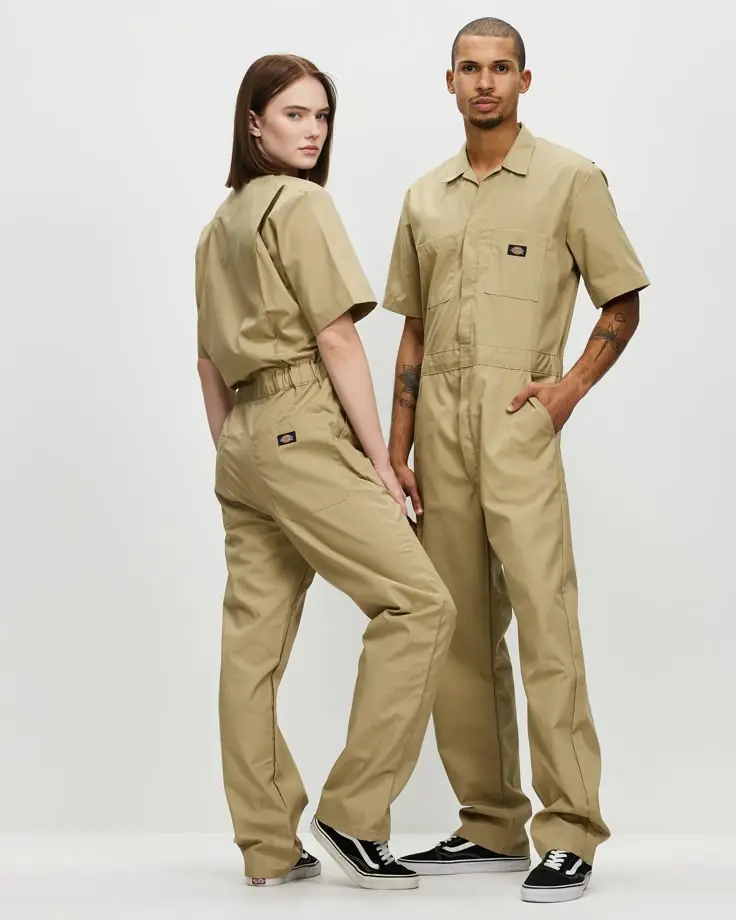
Mining, construction and industrial services are tough on clothing. Garments face abrasion, repeated industrial laundering, heat, dust, oil and, on some sites, flash fire or arc hazards. Contractors who buy generic garments often discover problems in the field: seams that open at stress points, tape that peels, shade differences between batches, or paperwork that site safety teams will not accept.
A well-written garment specification prevents many of these problems. This guide shows how to build one.
Start from the hazard, not the garment
A specification begins with what the garment must do. Walk through the hazards with your safety team:
| Hazard | Typical garment response | Evidence to request |
|---|---|---|
| Low visibility, moving plant | Hi-vis background and retroreflective tape | Standard and edition, day or night class, test reports |
| Abrasion and tearing | Heavier fabric, reinforced knees and seat | Abrasion and tear test results |
| Flash fire or arc exposure | Flame-resistant fabric and construction | Specific standard and test report; site approval |
| Heat | Lightweight, breathable fabric | Comfort wear trials |
| Chemical or oil splash | Specific finishes or protective garments | Type of protection and test evidence |
| Repeated industrial wash | Colourfast, dimensionally stable fabric | Wash test results |
Hazards like flame and arc are not solved by choosing a heavier fabric. They require tested protective materials and construction, and a site's own policies may define what is acceptable. Never assume a hi-vis or heavy drill garment is flame-resistant.
Choose fabric deliberately
Typical heavy-duty choices include:
- Cotton drill: comfortable and durable; can shrink and fade if not stabilised.
- Poly-cotton drill: better colour retention and shrinkage control; common for contractors.
- Ripstop: woven with reinforcement threads to resist tear propagation.
- Stretch blends: improve mobility; check durability and wash performance.
- Inherently FR or treated FR fabrics: for flame-resistant garments; follow the fabric supplier's and site's requirements.
Decide weight with the environment in mind. Our guide to lightweight workwear for Australian heat explains the trade-off between comfort and durability.
Construction details that matter
Fabric is only half the story. Specify:
- Stitching: double or triple needle on stress seams, bartacks on pocket corners and belt loops.
- Reinforcement: knee-pad pockets, double-layer knees and seat, gusseted crotch.
- Pockets: type, depth and closure, particularly for tools, phones or gauges; consider whether pocket flaps affect any tape placement.
- Closures: heavy-duty zips and snaps; for FR garments, check that trims are suitable.
- Thread: appropriate thread type, especially on FR or hi-vis garments.
- Sizing: include a full size range with tall and short lengths where needed.
Hi-vis and branding
Where garments are both hi-vis and branded, place logos so they do not cover required retroreflective areas. Provide a drawing of tape layout and logo placement. Our hi-vis specification checklist goes through the full list of items.
Documentation for site induction and audits
Prepare a simple evidence pack for each garment:
- Product description and style code.
- Fabric composition and weight.
- Standard and edition targeted.
- Test reports with dates and laboratories.
- Care instructions, including wash temperature limits that preserve performance.
- Batch or lot traceability information.
Where a compliance claim is required, make sure the report matches the exact fabric and garment you are buying. A report for a similar fabric is not a report for yours.
Sampling and wear trials
Test samples in the field. Ask wearers about comfort, pocket usability and restrictions in movement. Wash the garment repeatedly following the care label and check shrinkage, shade and tape condition. Keep the approved sample as the reference for bulk inspection.
Managing production and inspection
For large contracts, ask for:
- fabric lot control to limit shade variation;
- in-line checks on critical seams;
- AQL-based final inspection with a report;
- carton marking by style, size and batch.
Dressource works with in-line checks and AQL-based final inspection and can share the inspection approach on request.
Lifecycle and replacement
Garments for hard environments wear out. Track wear rates by role and set a replacement policy. A slightly higher-cost, longer-lasting garment can lower total cost per wearer per year if it lasts through more wash cycles. Consider including repair or patch options for high-wear items.
What to send to get a quote
Provide your hazard assessment summary, garment list, quantities per size, fabric preference or reference garment, target standards, logo files and delivery country. You can send your specification or review our product catalog.
A sample specification for a work shirt
Illustrative structure only; fill each row from your own risk assessment and site requirements.
| Item | Example entry |
|---|---|
| Garment | Long-sleeve work shirt with chest pockets |
| Fabric | Poly-cotton drill, target weight and tolerance stated in gsm |
| Hi-vis | Not required, or standard, class and tape layout attached |
| Flame resistance | Not required, or named standard and test report required |
| Construction | Double-needle seams, bartacks at pocket corners |
| Closures | Heavy-duty snaps or buttons, tested for laundering |
| Sizing | Full range, regular and tall |
| Decoration | Embroidered company logo left chest, position drawing attached |
| Laundering | Industrial wash at stated temperature, expected cycles |
| Evidence | Fabric test reports, inspection report, batch traceability |
Common mistakes
- Treating hi-vis, flame resistance and abrasion resistance as the same thing. They are separate properties that need separate evidence.
- Accepting a certificate for similar fabric instead of the exact fabric in your garment.
- Ordering without a wear trial, then finding pockets or knee pads do not suit the task.
- Not planning for replacement. Heavy-duty garments wear out; budget by role.
- Ignoring shade control, so two deliveries of the same garment look different on site.
How a sourcing partner reduces the risk
Heavy-duty specifications need factories that can document fabric lots, seam construction and inspection results.. Dressource - Apparel Sourcing in Bangladesh coordinates tech-pack review, sampling, trim sourcing and end-to-end AQL inspection through a transparent supply chain and an ethical, sustainable factory network, so you can see who makes your order. For low MOQ garment production, programs start from 50 pieces per style, with the final MOQ confirmed per project. Corporate buyers can explore custom B2B workwear manufacturing, and teams that also need branded staff apparel can look at custom merch production. Whoever you choose, ask for certificate scope and dated test reports before you commit.
Frequently asked questions
Can Dressource manufacture flame-resistant garments?
We can produce FR garments to a specified fabric and construction. Whether a garment meets a particular standard depends on the fabric and test evidence, which we agree on a project basis.
Is a heavier garment always more durable?
Not necessarily. Fabric construction, fibre and seam design matter, as do finishing and wash treatments.
How do I keep colour consistent between batches?
Specify fabric lot control, approve a standard shade reference and ask for inspection of colour against that reference before shipment.
Same topic, other markets
- Cold-Weather Workwear for Canadian Winters: Insulation, Layering and Fabric Choices
- Lightweight Workwear for Australian Heat: Fabric Weights, Weaves and Sun Protection
- Uniformes sanitarios y de hostelería: tejidos, lavado industrial y acabados que duran
- How to Choose the Right Uniform Material for High-Moisture Car Wash Operations
- Restaurant & Hospitality Uniform Trends 2027: Balancing Comfort, Durability and Brand
Related guides
- Hi-Vis Clothing in Australia: An AS/NZS 4602.1 Specification Checklist for Buyers
- Lightweight Workwear for Australian Heat: Fabric Weights, Weaves and Sun Protection
- How to Choose a Custom Workwear Manufacturer for Australia: A Buyer's Evaluation Guide