Australia · EN
Hi-Vis Clothing in Australia: An AS/NZS 4602.1 Specification Checklist for Buyers
Our standards-by-country guide compares hi-vis systems across the world. This article goes deeper on Australia and gives you a checklist you can paste into a supplier brief.
A note before we start: standards are revised, and this page is not a substitute for the standard itself. Obtain the current edition from Standards Australia and confirm requirements with your site owner, principal contractor or safety regulator.
Why the specification matters
Under Australian work health and safety laws, the business or undertaking is responsible for managing risks, including providing appropriate personal protective equipment where risks cannot be eliminated by other controls. For work near moving plant, roadways or low-light environments, hi-vis garments are part of that picture. The garment you buy should therefore be specified to a recognised standard rather than "bright yellow with silver stripes".
The core reference documents
- AS/NZS 4602.1 covers high-visibility safety garments for high-risk applications. A companion part addresses lower-risk applications, so confirm which one your risk assessment calls for.
- AS/NZS 1906.4 covers retroreflective materials and devices for road traffic control, which is the reference for retroreflective tape used on garments.
Always check the edition. Ask your supplier to state in writing which edition their sample targets.
Step 1: Decide day, night or day/night use
Australian hi-vis garments are classified by the conditions they are designed for: day only, night only, or day and night use. The class determines the garment design and the amount and placement of fluorescent background and retroreflective material.
Ask your safety team:
- Will staff work in daylight only, at night, or both?
- Is there a client or site rule that requires day/night garments regardless?
- Will the garment be worn over other layers?
Choosing the wrong class is the most common specification error, because buyers default to what they have always ordered.
Step 2: Fix the colour and fabric
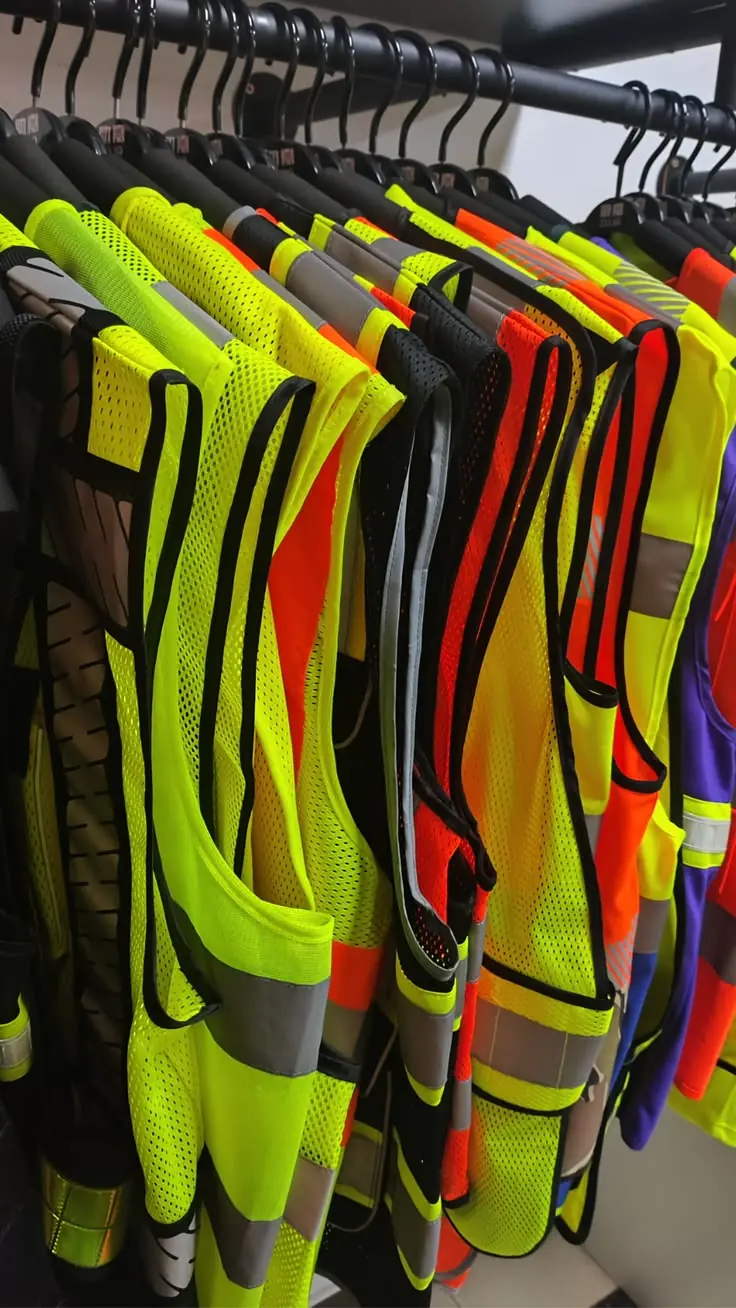
Hi-vis garments use fluorescent background colour, typically yellow-green or orange-red. State the colour name and, if you have a client requirement, the reference. Colour must be checked in the fabric you will use, as fabric type and dye method change how fluorescence holds up after washing and sun exposure.
For fabric, decide:
| Choice | Consideration |
|---|---|
| Polyester knit (mesh/birdseye) | Light and breathable; common for vests and tees; good for heat |
| Polyester or poly-cotton woven (drill) | Heavier, more durable; suits shirts, trousers and jackets |
| Weight (gsm) | Heavier is more durable but hotter; hot-climate sites often choose lighter options |
| Finish | Stain release, water repellency, UPF treatment where required |
Our article on lightweight workwear for Australian heat discusses how to balance weight and protection.
Step 3: Specify the retroreflective tape
State the tape type and the standard it complies with, the width, the colour, and how it is attached (sewn or heat-applied). Ask the supplier for the tape manufacturer's test data and the wash-cycle performance claim.
Tape placement is not cosmetic. Placement and the minimum area of material are defined in the garment standard for each class, so give your supplier a drawing or reference garment and ask them to confirm placement against the standard.
Step 4: Specify construction details
- Closure type: zip, hook-and-loop or snaps (breakaway closures can be relevant for some environments).
- Pockets: whether they interrupt the tape and whether flaps are needed.
- Sizing: confirm a size chart that fits your workforce, including women's fits if relevant.
- Logo placement and method: embroidery or heat-transfer logos should not cover retroreflective material in a way that reduces compliance.
Step 5: Agree the evidence you need
This is where many orders fall short. Write down which of the following you require, and who pays:
- A test report for the fabric from an accredited laboratory.
- A test report for the finished garment, where the standard requires it.
- Tape test data and wash durability information.
- Batch traceability, so a defective lot can be identified.
- A pre-shipment inspection report including colour and tape placement checks.
Dressource Workwear produces to customer specifications, including targets such as AS/NZS 4602.1, and agrees fabric certification and any third-party testing per project. We do not claim a garment meets a standard without the supporting evidence, and we would ask you to hold any supplier to the same discipline.
Step 6: Plan sampling around the standard
Because compliance depends on construction, sample the real garment, not a similar one. Send the first sample for review against your checklist. If third-party testing is required, build the laboratory time into the schedule before you commit to a delivery date.
A paste-ready checklist for your brief
- Standard and edition: ______
- Class (day / night / day-night): ______
- Fluorescent colour: ______
- Fabric composition and gsm: ______
- Retroreflective tape type, width and standard: ______
- Tape layout drawing attached: yes / no
- Closure, pockets and size range: ______
- Logo position and method: ______
- Test reports required (fabric / garment / tape): ______
- Inspection requirements (AQL, third party): ______
- Quantity per size and delivery location: ______
Which garment type for which job?
| Garment | Typical use | Points to specify |
|---|---|---|
| Vest | Quick-to-wear layer over other clothing, traffic control, visitors | Class, tape layout, closure, side adjustment |
| Long-sleeve shirt | Outdoor work in the sun, where arms need covering | Fabric weight, UPF requirement, tape on sleeves and torso |
| Trousers or bib overalls | Added visibility for lower body, night work | Tape position, durability, knee reinforcement |
| Jacket or wet-weather garment | Cold or wet conditions | Waterproofing, breathability, hood and tape visibility |
Your risk assessment and your site rules decide which garment is needed. A vest is often enough for visitors, but more demanding work may call for full garments.
Common mistakes
- Choosing by colour name alone without a standard, class or colour reference.
- Mixing day-only garments into night work.
- Placing logos over tape during decoration.
- Using washing instructions the tape cannot survive, which shortens garment life.
- Letting garments stay in service after the fabric has faded or the tape has worn.
Inspecting garments regularly and replacing them when fluorescence or retroreflection has deteriorated is as important as the original specification.
How a sourcing partner reduces the risk
Hi-vis specifications fail most often at the hand-off between the safety team and the factory, which is where a sourcing partner earns its keep.. Dressource - Apparel Sourcing in Bangladesh coordinates tech-pack review, sampling, trim sourcing and end-to-end AQL inspection through a transparent supply chain and an ethical, sustainable factory network, so you can see who makes your order. For low MOQ garment production, programs start from 50 pieces per style, with the final MOQ confirmed per project. Corporate buyers can explore custom B2B workwear manufacturing, and teams that also need branded staff apparel can look at custom merch production. Whoever you choose, ask for certificate scope and dated test reports before you commit.
Frequently asked questions
Is hi-vis mandatory for all Australian worksites?
Requirements depend on the risk assessment, the site rules, and any applicable regulations or codes. Check with your safety adviser and principal contractor rather than relying on a general rule.
Can I put my company logo on a hi-vis garment?
Usually yes, but logo size and position must not compromise the required areas of fluorescent and retroreflective material. Agree placement with the manufacturer against the standard.
Do all hi-vis garments need third-party testing?
That depends on your contract and the claim the supplier is making. If a compliance claim is required, ask for the test report that supports it.
Can Dressource produce hi-vis garments for Australia?
We manufacture hi-vis vests, shirts and jackets to your specification. Review our product catalog or send your specification to discuss testing and timelines.
Same topic, other markets
- CSA Z96 High-Visibility Safety Apparel: Specifying Garments for Canadian Worksites
- Ropa de alta visibilidad en España: guía de EN ISO 20471, clases y marcado CE
- High-Visibility Workwear Standards Explained: ANSI/ISEA 107, CSA Z96, EN ISO 20471 & AS/NZS 4602.1
Related guides
- Mining and Construction Uniforms in Australia: How to Write a Garment Specification That Works
- Lightweight Workwear for Australian Heat: Fabric Weights, Weaves and Sun Protection
- How to Choose a Custom Workwear Manufacturer for Australia: A Buyer's Evaluation Guide