
Canada · EN
CSA Z96 High-Visibility Safety Apparel: Specifying Garments for Canadian Worksites
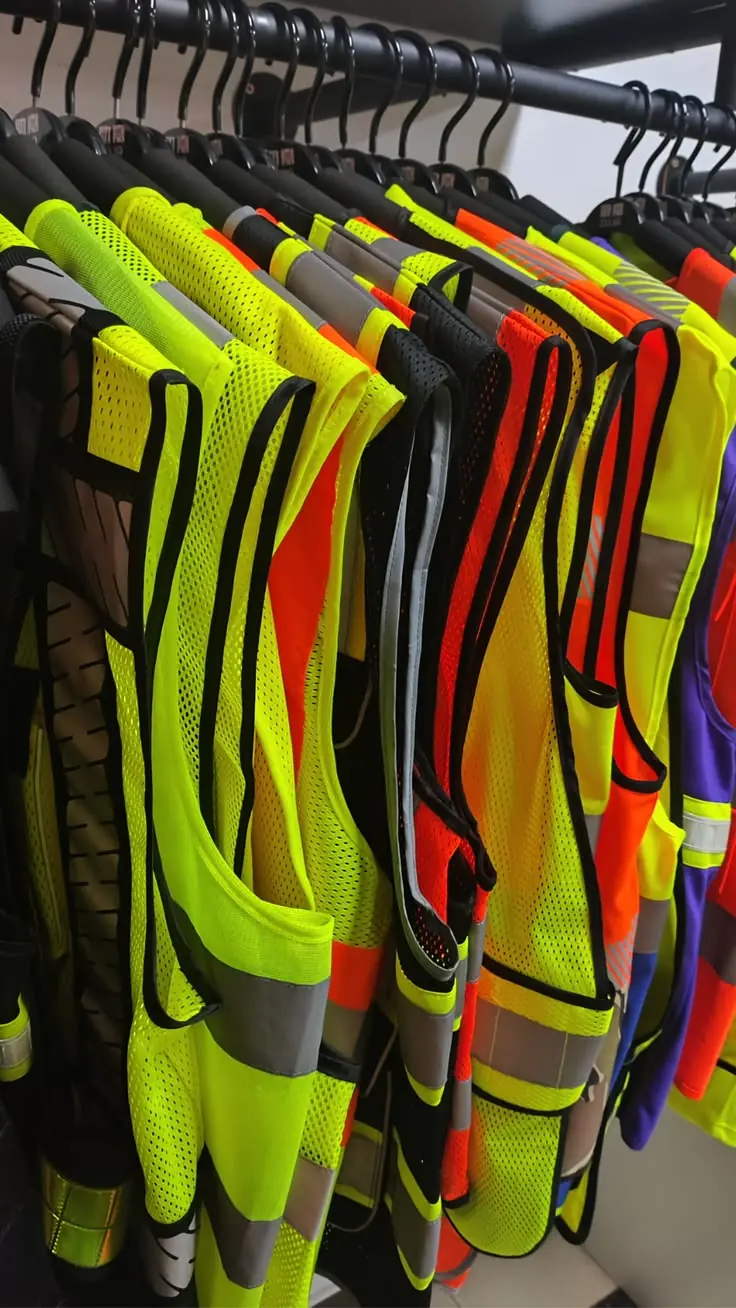
Our global hi-vis standards guide compares ANSI/ISEA 107, CSA Z96, EN ISO 20471 and AS/NZS 4602.1. This article focuses on Canada and shows how to turn the standard into a buyer's specification.
Standards are revised, so confirm the current edition of CSA Z96 with CSA Group, and confirm which requirements apply to you with your provincial occupational health and safety authority, your site owner or your principal contractor. This article is general information, not legal or safety advice.
What CSA Z96 covers
CSA Z96 is the Canadian standard for high-visibility safety apparel. It sets requirements for the design and performance of garments intended to make the wearer conspicuous in hazardous conditions, such as work near traffic or mobile equipment. It addresses elements such as the fluorescent background material, retroreflective material, minimum areas, placement and garment classes, and it refers to performance requirements for materials.
Canadian occupational health and safety is largely governed at the provincial and territorial level, with federal rules for federally regulated workplaces. So one province's requirement for hi-vis clothing (for example, for traffic control persons or roadside workers) may reference CSA Z96, while another may refer to different language. Ask the regulator or the site owner which standard and class they expect.
The elements to specify
1. Garment class
Garments are categorised by class, reflecting the amount of fluorescent and retroreflective material and the design. A higher class generally means greater conspicuity, aimed at higher-risk situations such as higher traffic speeds or complex backgrounds. The class required depends on your risk assessment and on the rules that apply to your workplace.
2. Colour
The fluorescent background colour is typically fluorescent yellow-green or fluorescent orange-red. Choose the colour on the basis of your environment and site requirements; for example, some sites prefer orange against vegetation or yellow-green in other settings. Ask your supplier to confirm that the fabric they will use is a high-visibility colour suitable for the standard.
3. Retroreflective material
Specify the retroreflective tape: its type, width, colour, performance level and how it is attached. Ask for the tape manufacturer's data and wash-durability information. Tape is a common failure point on garments that are laundered often.
4. Design and placement
The standard prescribes how material must be arranged, including coverage around the torso and, for higher classes, on sleeves or legs. Provide your supplier with a tape layout drawing and ask them to confirm it against the standard. Pockets, logos and closures must not interfere with required material.
5. Fabric and comfort
High-visibility fabrics range from lightweight mesh vests to insulated parkas. For Canada, this includes winter garments, where hi-vis must be combined with warmth, wind resistance and, in some cases, water resistance. See our cold-weather workwear guide.
CSA Z96 and ANSI/ISEA 107
Many North American buyers know ANSI/ISEA 107. The two standards are closely related and have been developed with attention to one another, but they are separate documents with their own requirements and structure. Do not assume that a garment labelled to one automatically meets the other. If you supply across the border, write both references into your specification and ask the supplier which they are targeting and what evidence exists.
Evidence to request
Agree these items in writing before sampling:
| Item | Detail |
|---|---|
| Standard and edition | For example, CSA Z96 with the edition stated |
| Class and colour | As defined by your risk assessment |
| Fabric test reports | From an accredited laboratory, as your contract requires |
| Garment-level evidence | Where the standard or client requires it |
| Tape data | Type, standard, wash durability |
| Traceability | Batch or lot identification |
| Inspection | AQL level and report, including tape placement and colour checks |
Dressource Workwear manufactures hi-vis garments to the customer's specification, including common targets such as CSA Z96 and ANSI/ISEA 107, and fabric certification and third-party testing are agreed per project. We do not describe a garment as compliant without evidence to support it.
Sampling for hi-vis
Sample the real garment. Check tape layout against your drawing, measure material areas, review colour in daylight, and wash-test the sample several times. If third-party testing is required, build laboratory time into the schedule. For small quantities, ask whether testing can be shared across styles built from the same fabric and construction.
Branding on hi-vis
Companies often want logos on hi-vis garments. Place logos where they do not cover required retroreflective or fluorescent material, and choose methods that suit the fabric. Embroidery on mesh may not be suitable; heat-transfer or screen printing may be better.
Common mistakes
- Specifying "hi-vis" without a standard or class.
- Ordering a lower class than the site requires.
- Using decorations that block tape.
- Accepting test reports for a different fabric.
- Overlooking laundering, where tape loses performance faster than expected.
A paste-ready specification checklist
- Standard and edition: ______
- Garment class: ______
- Fluorescent colour: ______
- Fabric composition and weight: ______
- Retroreflective material type, width and wash performance: ______
- Tape layout drawing attached: yes / no
- Closure, pockets and size range: ______
- Winter requirements (insulation, hood, cuffs): ______
- Logo position and method: ______
- Evidence required (fabric reports, garment-level reports, tape data): ______
- Inspection requirements (AQL, third party): ______
- Quantity per size and delivery location: ______
Use the same checklist for every supplier you compare. It keeps quotations comparable and makes any gaps in evidence obvious. If a supplier cannot fill in a line, ask why before you place an order.
How a sourcing partner reduces the risk
Hi-vis garments for Canadian sites need a documented tape layout, fabric evidence and traceable batches.. Dressource - Apparel Sourcing in Bangladesh coordinates tech-pack review, sampling, trim sourcing and end-to-end AQL inspection through a transparent supply chain and an ethical, sustainable factory network, so you can see who makes your order. For low MOQ garment production, programs start from 50 pieces per style, with the final MOQ confirmed per project. Corporate buyers can explore custom B2B workwear manufacturing, and teams that also need branded staff apparel can look at custom merch production. Whoever you choose, ask for certificate scope and dated test reports before you commit.
Frequently asked questions
Is CSA Z96 mandatory?
The standard itself is voluntary until adopted by regulation or required by contract. Provincial rules, site policies and client requirements often reference it. Check which applies to your workplace.
Is ANSI/ISEA 107 accepted in Canada?
That depends on the regulator, site owner and client. Do not assume equivalence; confirm in writing.
Can I order small runs of custom hi-vis garments?
Dressource programs start from 50 pieces per style, with the final MOQ confirmed per project. Send your specification to discuss options.
Same topic, other markets
- Hi-Vis Clothing in Australia: An AS/NZS 4602.1 Specification Checklist for Buyers
- Ropa de alta visibilidad en España: guía de EN ISO 20471, clases y marcado CE
- High-Visibility Workwear Standards Explained: ANSI/ISEA 107, CSA Z96, EN ISO 20471 & AS/NZS 4602.1
Related guides
- Cold-Weather Workwear for Canadian Winters: Insulation, Layering and Fabric Choices
- Custom Workwear Manufacturers for Canadian Buyers: How to Evaluate Overseas Suppliers
- Uniform Programs for Multi-Location Canadian Franchises: Sizing, Rollout and Reorders