
Canada · EN
Custom Workwear Manufacturers for Canadian Buyers: How to Evaluate Overseas Suppliers
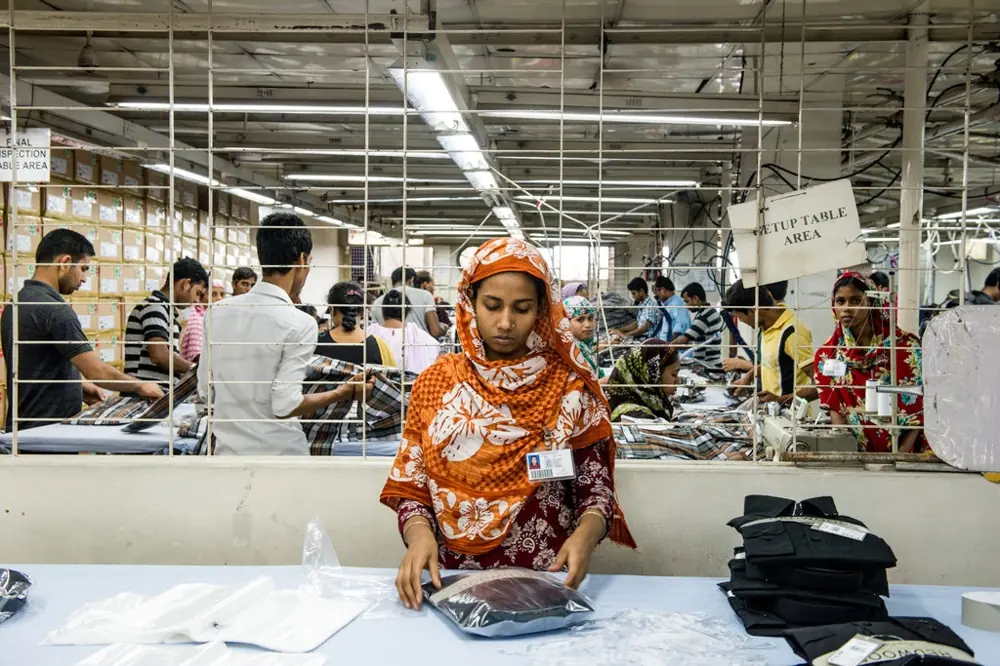
Canadian buyers face a particular mix of demands: cold winters, strong safety cultures, bilingual labelling expectations, and growing scrutiny of supply chains. If you are considering an overseas manufacturer for custom workwear, the evaluation process should be as structured as for any critical supplier. This guide offers a framework for shortlisting, vetting and testing manufacturers before you commit to volume.
Step 1: Write your requirements down
A supplier cannot give you a useful quote on a vague request. Prepare a short brief with:
- the garments you need and where they will be worn (warehouse, roadside, plant floor, restaurant, healthcare, winter outdoor);
- fabric preferences or a reference garment;
- any standards your clients or sites require, written with the standard number and edition (for example, CSA Z96 for high-visibility safety apparel);
- logo artwork and placement;
- quantities per style and size, and expected reorder frequency;
- delivery destination and target date.
Our CSA Z96 guide shows what to define for high-visibility garments, and the cold-weather workwear guide covers insulation and layering decisions.
Step 2: Shortlist on evidence
Look for suppliers who can show, not just say:
- Production visibility: photos or videos of real cutting, sewing, embroidery and finishing, such as those on our factory and team page.
- Product relevance: experience with the garment types you need, such as hi-vis, coveralls, FR shirts, polos and aprons.
- Decoration capability: embroidery, printing and labelling in-house or through close partners.
- Quality system: named checkpoints, an AQL level and a sample inspection report format.
- Transparent communication: a named contact and written confirmation of key decisions.
Be cautious with listings that show many certification logos without scope information. Ask which factory holds each certificate, the issue and expiry dates, and which products or processes it covers. Dressource Workwear shares certificate scope on request.
Step 3: Ask the right compliance questions
| Topic | Question to ask | Why it matters |
|---|---|---|
| Product standards | Which standard and edition are you targeting, and what test reports exist? | A claim is only as strong as its evidence |
| Social compliance | Which factories make my order, and what audits cover them? | Supports your due diligence and reporting |
| Restricted substances | Is there a restricted substances list and test evidence? | Customers may require it |
| Labelling | Can you apply bilingual or compliant labels? | Retail and some institutional buyers require them |
| Traceability | Can you identify batches and lots? | Enables recalls and claims |
Canadian companies of a certain size, and those importing goods into Canada, may have reporting duties under the Fighting Against Forced Labour and Child Labour in Supply Chains Act. Our import guide for Canada explains the practical side. Start by asking suppliers what documentation they can provide.
Step 4: Use samples as a test of the relationship
The sampling stage tells you more about a supplier than a brochure. Evaluate:
- Responsiveness: how quickly do they answer questions and send updates?
- Accuracy: do measurements match your spec sheet?
- Problem solving: how do they respond to corrections?
- Documentation: do they provide measurement reports and approved-sample records?
Keep the approved sample as the reference for bulk inspection.
Step 5: Compare landed cost
A low ex-factory price can disappear once freight, duties, taxes and brokerage are added. Compare suppliers using the same Incoterm, and build a landed-cost model for each option. Ask your customs broker about duty treatment for your specific products, including how Bangladesh's tariff status applies, because Bangladesh has been scheduled to move out of the UN least developed country category in late November 2026 and transition arrangements differ by market.
Step 6: Start with a pilot order
Before a full-scale programme, place a pilot order of one or two hero styles in modest quantities. Dressource programs start from 50 pieces per style, with styles mixable within an order and the final MOQ confirmed per project. Use the pilot to check fit, durability and delivery performance, and to refine your process.
Common mistakes to avoid
- Choosing on unit price alone, ignoring landed cost and the cost of problems.
- Skipping the sample stage to meet a deadline.
- Assuming compliance from a logo or a similar garment's test report.
- Underestimating winter seasonality, and missing the window for heavier outerwear.
- Forgetting label requirements, including language and fibre content.
- Not agreeing on defect handling before production.
A simple decision matrix
Score each supplier from 1 to 5 on specification understanding, sample quality, evidence, communication, landed cost and terms. Weight the criteria by what matters most to you, for example evidence and sample quality for safety garments, and landed cost for high-volume basics. Discuss gaps with each supplier before deciding.
Questions to send to every shortlisted supplier
Send the same message to each supplier and compare the written replies.
- Which factory or factories will make my order, and where are they located?
- What production steps are done in-house and what is subcontracted?
- What is your quality-control process, and what AQL level do you use at final inspection?
- Which certificates cover the factory, with what scope and expiry date?
- What test reports exist for the fabric or garment I am buying?
- What is the minimum order quantity for my styles, and what drives it?
- How many sample rounds are included, and how long does each take?
- Which Incoterms do you quote, and what is included in each?
- How do you handle defects found after delivery?
- Can you provide documents to support our supply-chain reporting?
A supplier that answers precisely, in writing, is usually a supplier that runs a controlled process. Vague or evasive answers are information too.
How a sourcing partner reduces the risk
A sourcing partner can run the supplier checks for you and gives you a single point of accountability.. Dressource - Apparel Sourcing in Bangladesh coordinates tech-pack review, sampling, trim sourcing and end-to-end AQL inspection through a transparent supply chain and an ethical, sustainable factory network, so you can see who makes your order. For low MOQ garment production, programs start from 50 pieces per style, with the final MOQ confirmed per project. Corporate buyers can explore custom B2B workwear manufacturing, and teams that also need branded staff apparel can look at custom merch production. Whoever you choose, ask for certificate scope and dated test reports before you commit.
Frequently asked questions
Can a Bangladesh-based manufacturer supply Canadian buyers?
Yes. Garments are exported from Bangladesh to many markets, and Dressource exports to Canada by air or sea with FOB, CIF or DDP terms agreed in the quote. Customs duties and import rules vary, so confirm them with your broker.
How long does it take to get workwear from overseas?
Timelines include sampling, production, inspection and shipping. A firm schedule is set after sample approval. Seasonal products such as winter outerwear need early planning.
Should I order bilingual labels?
Labelling requirements depend on the product, channel and province. Confirm requirements early and brief the supplier before sampling.
How do I request a quote?
Send us your garment list, quantities and destination, and we will discuss specification, samples and timelines.
Same topic, other markets
- How to Choose a Custom Workwear Manufacturer for Australia: A Buyer's Evaluation Guide
- Fabricantes de ropa laboral: cómo elegir proveedor en Asia si compras desde España
Related guides
- Importing Workwear from Bangladesh to Canada: CBSA, Textile Labelling and Forced-Labour Reporting
- Private-Label Uniform Programs in Canada: OEM vs ODM, Tech Packs and Sampling
- CSA Z96 High-Visibility Safety Apparel: Specifying Garments for Canadian Worksites