Australia · EN
How to Choose a Custom Workwear Manufacturer for Australia: A Buyer's Evaluation Guide
Choosing a custom workwear manufacturer is less about finding the lowest unit price and more about finding a partner whose process you can verify. For an Australian buyer, the gap between a sample on your desk and a 3,000-piece bulk order six weeks later is where most problems appear: shade drift, sizing that does not match your workforce, trims that fail in the wash, or paperwork that does not survive an audit.
This guide sets out a practical way to compare suppliers, whether you are equipping a mining services contractor, a facilities company or a hospitality group, or building your own workwear label.
Start with a written specification, not a catalog
Manufacturers can only be compared fairly when they quote against the same document. Before you contact anyone, write a one-to-two page brief covering:
- Garment list and use case: for example, a long-sleeve drill shirt for outdoor use, cargo trousers with knee-pad pockets, or a hi-vis vest for traffic control.
- Fabric direction: fibre blend, weight in grams per square metre (gsm), weave, and any finish such as stain release or UPF rating.
- Compliance targets: any standard your site, client or contract requires, written as a standard number and edition rather than "meets Australian standards".
- Decoration: embroidery or print, positions, logo file format and Pantone references.
- Quantities per style and size split, plus expected reorders over twelve months.
- Delivery: destination, target landing date and preferred Incoterm.
If you only have a rough idea, you do not need a perfect tech pack to start. A reference garment and clear measurements are enough for a competent factory to develop a first sample. Our guide to private label workwear explains what a tech pack should contain when you are ready for one.
What to look for in a manufacturer
Process visibility
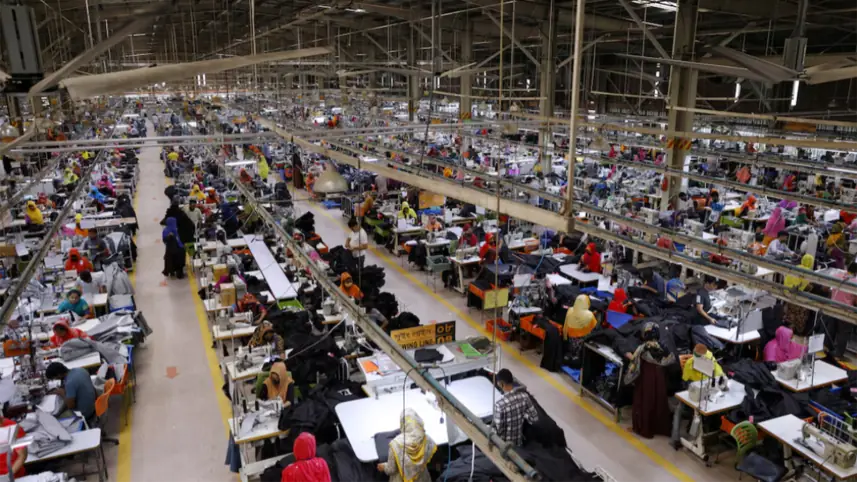
Ask how the work flows from pattern to carton: cutting, sewing, embroidery or print, washing, finishing, inspection and packing. A manufacturer that controls or closely coordinates these steps can answer detailed questions about where a problem occurred. Photos of real production floors, such as those on our factory page, are a reasonable starting point, but ask for a video call or a visit when the order justifies it.
Quality control you can describe
"Strict QC" tells you nothing. Better answers name the checkpoints: fabric inspection on arrival, in-line checks during sewing, and an AQL-based final inspection before shipment. Ask who performs each check, which defect classes are counted, and whether you can appoint a third-party inspector. Dressource Workwear works with in-line checks and AQL-based final inspection; ask us for the inspection report format when you request a quote.
Honest compliance evidence
Be wary of any supplier that says a garment "is certified" without naming the standard, the test laboratory and the report date. A garment claim is only as good as the test report behind it, and a facility certificate (for example a social-compliance audit) is not the same thing as a product test. Ask for:
- the certificate scope, meaning which factory and which products it covers;
- test reports for the specific fabric or garment, where your contract requires one;
- clarity on who pays for third-party testing and how long it adds to the timeline.
For hi-vis and flame-retardant garments, where failing a standard has safety consequences, agree the testing path in writing before sampling. Our hi-vis specification checklist shows what that looks like in practice.
Sampling discipline
A structured sampling stage protects you. Expect at least a first fit sample and a pre-production sample in the approved fabric, with measurements checked against your spec sheet. Keep the approved sample sealed and labelled as the reference for bulk inspection.
Minimum order quantities that match your reality
Large retailers sometimes quote minimums in the thousands per colour. Many buyers need far less. Dressource programs start from 50 pieces per style, and styles can be mixed within an order, with the final MOQ confirmed per project based on garment, fabric and decoration. Whichever supplier you use, ask what changes the MOQ (fabric availability, dyeing, trims) so you can plan reorders sensibly.
Compare suppliers on the same scorecard
| Criterion | What good evidence looks like | Red flag |
|---|---|---|
| Specification response | Questions back to you about fabric, fit and use | Instant price with no questions |
| Sampling | Written measurement report with each sample | "Sample will match bulk" with nothing documented |
| QC | Named checkpoints and AQL level | Generic claims of "100% inspected" |
| Compliance | Scope-specific certificates, dated test reports | Logos without certificate numbers |
| Communication | Single point of contact, written confirmations | Decisions made only in chat messages |
| Terms | Clear Incoterm, payment and defect remedies | Vague delivery promises |
Questions specific to Australian conditions
Australian workwear faces heat, UV, dust and often long outdoor shifts. When you brief a supplier, ask them to address fabric weight and breathability, colourfastness after repeated industrial laundering, and, where relevant, sun protection. Our guide to lightweight workwear for Australian heat covers fabric choices in more detail, and the mining and construction specification guide covers heavier-duty requirements.
Many large Australian buyers also need supplier information for their own supply-chain reporting. If your business falls under the Modern Slavery Act 2018 (Cth), or sells to someone who does, ask early about factory social-compliance documentation and how it is shared. The import guide for Australia explains the practical side.
Timeline and cost: what to discuss up front
A realistic schedule includes brief and quotation, sampling and approval, bulk production, inspection, and shipping by air or sea. A firm production schedule can only be set after sample approval, so be suspicious of any fixed date quoted before that point. Unit cost is driven by fabric, pattern complexity, decoration, packaging and freight terms; see our guide to MOQ, lead time and pricing for the factors in more detail.
A simple first-order strategy
If you are trying an overseas manufacturer for the first time:
- Start with one or two hero styles rather than a full range.
- Order a pilot run sized for a single team or site.
- Wear-test garments through several wash cycles and collect feedback from the people wearing them.
- Scale to a full programme once fit, durability and delivery performance are proven.
This approach costs a little more per piece at first, but it exposes problems while they are still cheap to fix. It also gives you real data, such as shrinkage, wear points and size distribution, to refine the specification before the larger order.
How a sourcing partner reduces the risk
Most Australian buyers cannot audit factories themselves, so many hand specification checks, sampling and inspection to a sourcing partner.. Dressource - Apparel Sourcing in Bangladesh coordinates tech-pack review, sampling, trim sourcing and end-to-end AQL inspection through a transparent supply chain and an ethical, sustainable factory network, so you can see who makes your order. For low MOQ garment production, programs start from 50 pieces per style, with the final MOQ confirmed per project. Corporate buyers can explore custom B2B workwear manufacturing, and teams that also need branded staff apparel can look at custom merch production. Whoever you choose, ask for certificate scope and dated test reports before you commit.
Frequently asked questions
Can a Bangladesh manufacturer produce to Australian standards?
A factory can produce to a written specification, including garments intended to target standards such as AS/NZS 4602.1 for hi-vis clothing. Whether a particular garment meets a standard is shown by its test report, so agree testing and documentation requirements before sampling.
How many samples should I budget for?
Plan for a fit sample and a pre-production sample at minimum, and allow time for a second round if measurements or colour need adjustment. Complex garments or new fabrics may need more.
Is it better to use a trading company or a factory-direct supplier?
Either can work. What matters is transparency about who makes the garment, who is accountable for quality, and whether you can see the production process. Ask directly and ask for the answer in writing.
What should I send to get an accurate quote?
Send the garment list, quantities per size, fabric preference or reference garment, logo files, target standard if any, and destination. You can request a quote with those details.
Same topic, other markets
- Custom Workwear Manufacturers for Canadian Buyers: How to Evaluate Overseas Suppliers
- Fabricantes de ropa laboral: cómo elegir proveedor en Asia si compras desde España
Related guides
- Wholesale Work Uniforms in Australia: A Bulk Ordering Guide for Fleets, Facilities and Franchises
- Importing Workwear from Bangladesh to Australia: Duties, Labelling and Modern Slavery Reporting
- Private Label Workwear in Australia: Launching Your Own Range with an OEM/ODM Partner