
Australia · EN
Wholesale Work Uniforms in Australia: A Bulk Ordering Guide for Fleets, Facilities and Franchises
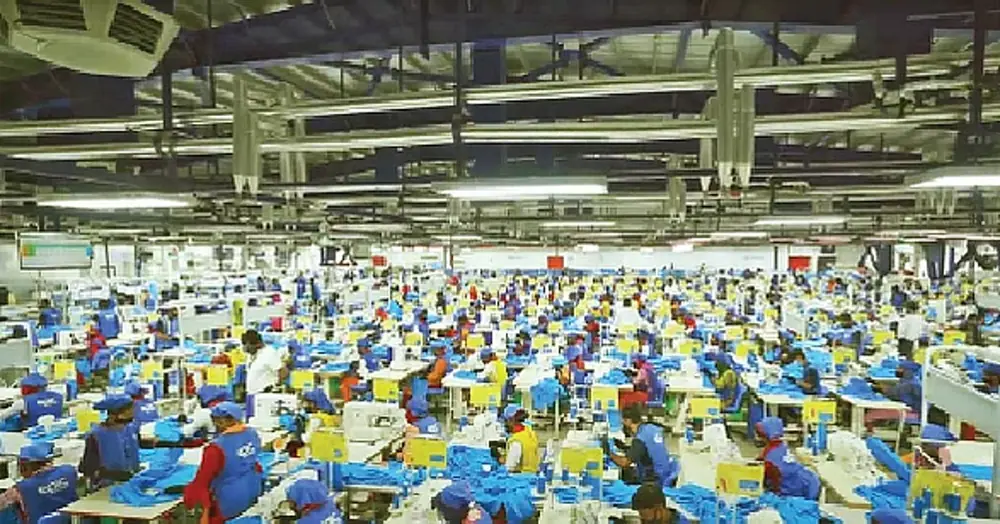
Wholesale and bulk uniform buying sounds simple: choose a garment, multiply by headcount, place an order. In practice, the businesses that run uniform programmes smoothly treat them as a small supply chain with forecasting, inventory and quality control. This guide explains how to do that for Australian fleets, facilities and multi-site operators.
Define who you are buying for
Group your wearers by role. Each role has a different garment mix, wear rate and replacement cycle:
- Field or site staff: high wear, frequent washing, replacement every few months to a year, depending on the job.
- Customer-facing staff: appearance matters; polos and shirts are replaced when they fade or pill.
- Supervisors and managers: smaller volumes, often different styles.
- New starters: a buffer of common sizes for onboarding.
Add a per-person issue (for example, 3 shirts, 2 trousers and 1 jacket) so your quantities are tied to a policy, not a guess.
Build a size curve from real data
The most expensive mistakes in bulk uniforms are wrong sizes. If you have no data, measure a sample of your workforce or collect size information through supervisors before you finalise quantities. Create a size curve showing the percentage of wearers in each size for men's and women's fits, then apply it to each style. Add a safety buffer, typically in the common middle sizes, for growth and turnover.
If your workforce is mixed, ask about separate women's patterns instead of relying on a unisex size chart.
Decide the order structure
| Approach | Best for | Trade-off |
|---|---|---|
| One large annual order | Stable headcount, simple styles | Cash tied up; risk of size or style change |
| Two to four scheduled orders | Growing teams or seasonal peaks | More coordination; better stock control |
| Core stock plus top-ups | Many sites, high turnover | Needs a reorder trigger and a warehouse |
A practical compromise is to place a main order sized to forecast demand, then schedule top-up orders against minimum stock levels for each size.
Understand MOQ and mixing
Manufacturers often set minimums by style and fabric colour. Dressource programs start from 50 pieces per style, and styles can be mixed within a single order, with the final MOQ confirmed per project. If you need several colours or sizes, ask how the minimum applies: per style, per colour, or per order.
Decoration planning
Logos affect cost and timeline. Decide early:
- Embroidery: durable and professional for polos, jackets and caps; stitch count affects price.
- Printing: suits larger graphics or lightweight fabrics; confirm wash durability.
- Placement: left chest, sleeve, back; apply a consistent rule across styles.
Provide vector artwork (AI, EPS or PDF) and Pantone references. Approving a digital proof and then a physical decorated sample avoids rework.
Calculate landed cost, not only unit price
A per-piece price tells only part of the story. Build a landed-cost view that includes:
- Unit price at your quantity and specification.
- Decoration, labels and packaging.
- Freight (air or sea) and insurance.
- Customs duty and GST on import, where applicable.
- Broker and port charges.
- Inland delivery to your warehouse.
Terms such as FOB, CIF and DDP split these responsibilities differently. Our import guide for Australia explains the practical steps, and your customs broker can confirm duty treatment for your specific products.
Plan the timeline backwards
Start from the date garments must be on site. Work backwards through freight time, final inspection, bulk production, sample approval and design. Add buffer for public holidays on both sides of the supply chain and for any third-party testing. Since a firm production schedule is set after sample approval, begin sampling early.
Quality protection for large runs
For bulk orders, ask for:
- an approved sample retained as the reference;
- an AQL-based final inspection with a report before shipment;
- carton labelling by style, colour and size so that stock can be received accurately;
- batch markings so you can trace problems to a production lot.
Receiving and storing stock
On arrival, check a sample of cartons against the packing list, measure a few garments against the spec sheet, and wash-test a small number. Record the date and any variances, so you can raise claims promptly under the agreed terms.
An illustrative issue calculation
These figures only demonstrate the method. Suppose a facilities company has 120 field staff, with an issue policy of three shirts, two pairs of trousers and one jacket per person, and a 10% buffer.
| Item | Policy | Base quantity | Order quantity with 10% buffer |
|---|---|---|---|
| Shirt | 3 per person | 360 | 396 |
| Trousers | 2 per person | 240 | 264 |
| Jacket | 1 per person | 120 | 132 |
Split each line using your size curve, then check each style against the manufacturer's minimum. Use your own turnover rate to set the buffer.
Common mistakes
- Buying one size curve for every role, although fits differ between field staff and supervisors.
- Ordering the whole year at once when headcount or branding may change.
- Overlooking decoration approval time, which can sit on the critical path.
- Comparing quotes on different Incoterms.
- Skipping a pilot wash test on the first delivery.
- Not storing the approved sample, which makes reorder matching harder.
How a sourcing partner reduces the risk
Bulk buyers need three things from a factory: fair minimums, repeatable shade and inspection reports they can read.. Dressource - Apparel Sourcing in Bangladesh coordinates tech-pack review, sampling, trim sourcing and end-to-end AQL inspection through a transparent supply chain and an ethical, sustainable factory network, so you can see who makes your order. For low MOQ garment production, programs start from 50 pieces per style, with the final MOQ confirmed per project. Corporate buyers can explore custom B2B workwear manufacturing, and teams that also need branded staff apparel can look at custom merch production. Whoever you choose, ask for certificate scope and dated test reports before you commit.
Frequently asked questions
What is the usual minimum for wholesale workwear?
It varies by supplier and style. Dressource programs start from 50 pieces per style with mixed styles allowed, and the exact MOQ is confirmed per project.
Should I buy generic stock or custom garments?
Generic stock is faster for small teams. Custom garments make sense when you need specific fabric, fit, colours or branding, or when volume justifies development.
How do I avoid running out of sizes?
Use a size curve, add a buffer in the middle sizes, and set minimum stock triggers for reorders.
How do I get a bulk quotation?
Send your garment list, quantities per size and destination. We can quote against your specification and discuss samples.
Same topic, other markets
- Uniform Programs for Multi-Location Canadian Franchises: Sizing, Rollout and Reorders
- Ropa laboral al por mayor: pedido mínimo, plazos y costes para empresas en España
- Custom Workwear MOQ, Lead Time and Pricing: How to Order Uniforms in Bulk from Bangladesh
Related guides
- How to Choose a Custom Workwear Manufacturer for Australia: A Buyer's Evaluation Guide
- Importing Workwear from Bangladesh to Australia: Duties, Labelling and Modern Slavery Reporting
- Private Label Workwear in Australia: Launching Your Own Range with an OEM/ODM Partner